


Wangmo County Tonghong Trading Co., Ltd
Wangmo County Tonghong Trading Co., Ltd , established in 2010, is an international trading company integrating R & D, production, sales and consignment. Our company from the establishment up to now, has an area of more than 900 acres of factories and planting base, the laboratory is also beginning to take shape at the present stage.Has many years of product sales experience and excellent customer resources.
Why Choose US
Our Factory
Wangmo County Tonghong Trading Co., Ltd , established in 2010, is an international trading company integrating R & D, production, sales and consignment. Our company from the establishment up to now, has an area of more than 900 acres of factories and planting base, the laboratory is also beginning to take shape at the present stage.
Our Product
At present, it specializes in the import and export business of tung oil and its related by-products. Also, the company has dealt in agricultural and sideline products such as oil tea seeds, camellia oil and linseed oil since 2015.
Our Certificate
Our management system has passed ISO9001 international certification. We also have a lot of patented production equipment.
Our Service
Our professional staff will follow up in time. We will carefully understand the needs of customers to provide customers with intimate service.

Tung oil is divided into raw tung oil and cooked tung oil, raw tung oil used in medicine and chemical industry; Cooked tung oil is processed from raw tung oil, which can replace varnish and paint and other coatings, and is directly used for machine maintenance, indoor wood flooring, wooden ceiling, sauna board, wooden balcony handrails, etc. Outdoor wooden floors, flower shelves, wooden houses, pavilions, fences, wooden Bridges, boats, chairs, wooden farm tools, etc.

The oil fume ink of the ancient method is dominated by the oil fume of the ancient method, and the raw material of the oil fume is collected by the most primitive smoke refining method. The tung oil, lard and raw paint are burned by the lampgrass and the smoke is collected by the bowl. Then use this smoke plus animal skin glue, with a variety of rare and rare accessories, by thousands of hammer million pestle refined. The whole process is divided into smoke, and material, press grinding, drying, edge filing, gold tracing, packing and other processes. The finished product does not contain any modern chemical additives, and has the characteristics of black and smooth color, firm and bright, no halo in paper, no glue in licking pen, long and not fading, rich aroma and anti-corrosion and mothproof.

The applicable period of the polymer is 3.3-dioxy-4.4 than that of MOCA-diaminophenylmethane is 2-3 times longer. The safety of the art reduces the toxicity of the operating environment while reducing the cost of polyurethane. At the same time, tung oil can treat rheumatism. Meanwhile,tung oil can clear heat, relieve pain, kill insects, relieve itching, reduce swelling, used to treat damp and heat rheumatism effect is better. Tung oil can be used as a kind of Chinese herbal medicine, with better medicinal effects, such as clearing heat and detoxifying, relieving itching, relieving swelling and relieving pain, detoxifying dampness, etc., and can also be used to treat skin diseases such as sou-fire sore and chilblennia.

The main component of tung oil is tung oil triglyceride, that is, 18 carboconjugated triene-9,11, 13-acid triglyceride. Under the action of base and acid, the triglycerol of tung oleic acid is hydrolyzed into unsaturated tung oleic acid containing three conjugated double bonds. Structurally it has good film formation, quick drying, tough film, water resistance, light resistance and resistance.
What is Pure Tung Oil
Pure Tung oil is a drying oil that's extracted from the seed of the tung tree, which is native to China and a few other Asian countries. The oil has been used for centuries as a water-resistant finish for boats and other wooden objects, as well as to finish stone. Pure Tung oil is an excellent alternative to other drying oils, such as walnut, linseed and soy. On top of producing a beautiful and protective finish, tung oil is also a popular choice for projects because it is versatile, easy to use, and environmentally friendly.
Advantages of Pure Tung Oil
Tung Oil Can Waterproof Wood- According to the original history of tung oil, this product was used to treat Chinese trade ships to keep these ancient boats sealed and waterproof. This natural oil hardens upon contact with the air and instantly creates a durable shield over the wood.
This Oil is Resistant to Harsh Chemicals- All-natural tung oil is resistant to alcohol and to acetone. This includes harsh elements like nail polish remover. This hard exterior shell has a hard, almost wet-like finish that still allows the natural grain of the wood shine through.
Tung Oil is 100% Food Safe- If you are looking for an oil that is completely food safe, then tung oil is a great option. It is not only FDA approved to be used near food and on food prep surfaces, it is also resistant to fruit and vegetable acids.
You can Expect Flexibility- Tung oil is not only flexible in terms of the different ways you can utilize it-but it is physically flexible as well. This oil finish will continue to protect the wood as it expands and extracts over time.
Tung Oil is Easy to Apply- Applying tung oil is simple, especially when compared to other wood oils. Simply rub it on and rub it off as needed for a virtually fool-proof finishing experience.
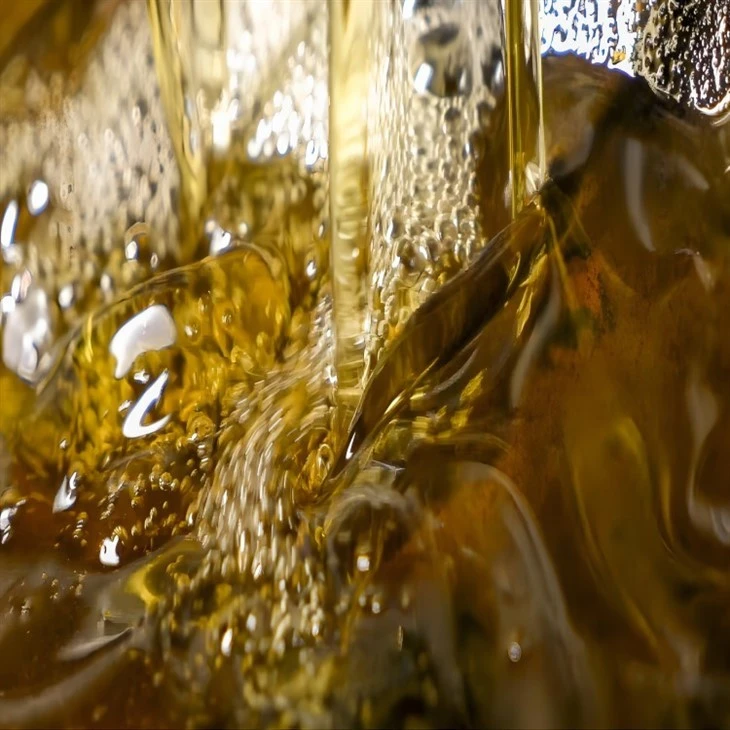
Pure Tung Oil comes from the cold pressing of the seeds or nuts of the Tung tree. Tung trees mainly grow in the mountainous regions of away from industrialization and pollution. Climate, soil and air quality are essential for high-quality oil. Our 100% Pure Tung Oil or wood oil is an all-natural finish manufactured by pressing the tung nut, no petroleum distillates or other additives - just Pure Tung Oil. All Pure Tung Oils are not the same. Pure Tung Oil is available in 3 grades, we only offer the best available, Grade 1 yellow. A better quality Pure Tung Oil will offer superior color, faster drying, and a long term elastic finish. Elasticity is an important factor as the oil must continue to flex with the expansion and contraction of the substrate on which it is applied. Pure Tung Oil is ASTM Quality Tested to be light in color with the highest amount of reactive sites to ensure drying.
Pure Tung Oil is recommended for wood finishing of kitchen tables, chopping blocks, wood, and concrete countertops, wood floors, concrete floors, refinishing wood floors, outdoor decks, outdoor furniture, wood siding, log homes both interior and exterior and similar uses. Its non-toxic nature makes it particularly appropriate for children's toys and furniture. It gives good protection to wood paneling and molding.
We have found tung oil to be a valuable helper in the workshop. It adheres very well to metal, and a light coat rubbed onto tool steel is an effective rust inhibitor. Wooden handles will also benefit from the occasional coat. The surface should be dusted to remove all loose particles. Alternatively, you can lightly sand the first coat before applying a second. Any filling, sealing or staining must be done before the oil is applied. The first coat should be a liberal one, and you can rub it over the wood with your hand, a soft rag. Allow this application to sit for 20 minutes so the oil can soak in, then remove any excess with clean soft rags. Check after about half an hour for any seeping, and rub this off as well. Let dry completely (24-48 hours) between coats. For woods with very open pores, allow an extra 24 hours drying time.
Tung oil can be applied pure or with Citrus Solvent added. Thinners such as Citrus Solvent can accelerate the drying process and greatly improve penetration.
The number of coats of oil to be applied will be determined by the intended use of the piece. Two to four coats are enough for decorative work, paneling and molding. Surfaces that receive moderate to heavy use or handling could need up to six coats for maximum protection, plus a light renewal coat a couple of times a year. Apply until the surface reaches the saturation point. This will be evident as the surface will not absorb more oil. Renewal and building coats are quickly applied with cheesecloth, a lint-free cloth or old nylon stockings. This process will give you a surface that will stand up to vigorous use and spills: water will bead on the surface.
Features of Pure Tung Oil
Tung oil stands out among all wood oils. Tung oil is a vegetable oil made from the oil-rich seeds of various South Asian tree-shaped species of the genus Vernicia. Fresh tung oil is amber, clear, and comparatively thick. The smell is nutty. Pure tung oil differs from other nut oils in its special composition. Tung oil shows a very characteristic behavior when heated, which plays a role in the technical properties: if it is heated strongly, this results in a strong increase in viscosity, which leads to gelatinization.
The specific weight increases while the refractive index is reduced. In contrast to all other natural oils, this makes the tung oil water-repellent and thus prevents the formation of water rings. Tung oil penetrates the wood more deeply than any other wood oil; it penetrates deeply into even the densest wood. In addition, compared to most other oxidative oils, it forms a fine, permanent film that retains its elasticity and moves with the wood. After hardening, the surface is solidified. There is no embrittlement or hairline crack formation on wooden surfaces, as the oil remains elastic even after it has hardened.
Thinning Pure Tung Oil - the Proper Way
Surface Coatings (polyurethane, lacquer and shellac) lay on the surface of the wood. Oils penetrate into the wood surrounding and lubricating layers of the woods structural fibers and filling its pores. Tung oil will require a minimum of 5-8 coats with many woodworkers moving well into the teens. Future coats will gravitate close to the depth of the last coat, building on its depth, durability and appearance.
The less viscid (thinner) the oil the easier and consequently deeper the wood absorbs that liquid. Based on that we are going to shoot to get the oil as deep as possible into the woods underlying fibrous layers. Since most oils in nature are thick and viscid we will thin our first coat by 70% (7 parts thinners to 3 parts Tung oil).
Future coats will be thinned as follows:
First Coat - 70% (7 Parts Solvent to 3 Parts Tung Oil)
Second Coat - 55% (51/2 Parts Solvent to 41/2 Parts Tung Oil)
Third Coat - 40% (4 Parts Solvent to 6 Parts Tung Oil)
Fourth Coat - 25% (1 Part Solvent to 3 Part Tung Oil)
Remaining Coats - 0% (No Solvent)
As I mentioned, future coats will gravitate close to the depth of the last coat, building on its depth, durability and appearance. Thinning can be accomplished by adding paint thinner, mineral spirits or naphtha. All are petroleum-based products that emit volatile organic chemicals (VOC's) during the application process and for a period of time afterward.
Applying Pure Tung Oil - Properly


Tung Oil can be applied with a natural bristle brush, a foam sponge type brush or a clean cotton rag. If using a cotton cloth swatch (old T-shirt material is perfect), fold it into a pad so there are no cut edges with hanging threads touching your surface to be finished (to avoid thread tear).
Start with the hardest to reach spots first to avoid contact later in the application. Apply following the grain of the wood. The object of the first coat is to saturate the wood as deeply as possible.
Apply a generous but controllable amount of Tung oil to your applicator especially for the initial few coats. The surface should look very, very wet but not puddled. The thinned oil should soak in rather quickly to kiln dried wood. Older and reclaimed woods will suck it up like a camel in the dessert. All areas should look wet but if any areas have standing puddles spread them out or wipe them off.
On the flip side if your wood sucks in your application, reapply again and again keeping the surface wet (but not puddled) with oil for the next 30 minutes. After 30 minutes your wood should be saturated with oil and any excess wiped off.
Watch for the next couple hours and if any excess oil has bubbled to the surface wipe it off. At this point allow to dry before applying the next coat.
Apply the first coat liberally. You can rub it with a soft rag. Allow to sit for 20 minutes so the oil can soak in, then remove any excess with clean soft rags. Check after about a half-hour for any seeping and rub this off as well.
Let dry completely (24-48 hours) between coats. For woods with very open pores, allow an extra 24 hours drying time.
Can be applied pure or thinned with Citrus Solvent (or mineral spirits or turpentine, if needed) by 50%. Thinners can accelerate the drying process and greatly improve the penetration by cutting the first coat of oil.
The number of coats will be determined by the intended use of the piece. 2-4 coats are enough for decorative work, paneling and moulding. Surfaces that receive moderate to heavy use or handling could need up to 6 coats for maximum protection, plus a light renewal coat a couple of times a year. Because of this, the coverage per bottle may vary greatly.
Apply till the surface reaches the saturation point. This will be evidentáas the surface will not absorb more oil. Renewal and building coats are quickly applied with cheese cloth, a lint free cloth or old nylon stockings. This process will give you a surface that will stand up to vigorous use and spills: water will bead on the surface.
Will store for years. It should be kept in an airtight container with minimum air space.
Pure Tung Oil can take 30 days or more to fully cure. See the DRYING/CURING section for more information.
Colored or pigmented stains (e.g.: water, gel, oil, or alcohol based) should NOT be used on food contact surfaces treated with Pure Tung oil.
Pure Tung Oil is usually thinned with oil-based solvents to make it easier to apply and help penetration. This will significantly increase the VOC content of the finish.
The solvent will evaporate and the final finish will still be food safe and non-toxic.
FAQ
Hot Tags: pure tung oil, China pure tung oil manufacturers, suppliers, factory, tung oil for a high quality finish on wood, tung oil for a polyester finish on wood, tung oil for flooring, tung oil for tables, tung oil for wood, tung oil for a grainy finish on wood


