


Linseed Oil
What is Linseed Oil
Linseed Oil is a fantastically versatile product. It has a huge range of applications, from use in DIY, to health food supplementation to playing a role in the making of linoleum flooring.The oil is made by pressing the dried, ripened seeds of the flax plant. The seeds can be warm-pressed, which gives a higher yield, or cold-pressed, which results in fewer impurities and is usually a better option.Linseed oil is classified as a drying oil, due to its high content of di- and tri-unsaturated esters. Because of these properties, linseed oil can also be combined with other oils.
Advantages of Linseed Oil
Controls Cholesterol Levels
Flaxseed oil has the highest content of omega-3s fatty acid. Omega-3 fatty acid helps to shred off the bad form of cholesterol (LDL) and enhances goog cholesterol. It helps to balance the cholesterol in our body.
Cancer Prevention
Flaxseed oil benefits include helping prevent the growth of breast tumors, prostate cancer, and colon cancer. Flaxseed oil reduces cancer cell multiplication and enhances apoptosis, that is cell death of cancer cells. Flaxseeds contain Lignans, which provide protection against cancers that are sensitive to hormones. Lignans also block the enzymes that function in hormone metabolism and inhibits the growth of the tumor cells.
Prevents Arthritis
The omega-3 fatty acids in flaxseed oil may help in reducing the stiffness of bones and other body parts. Osteoarthritic patients may also respond to these essential fatty acids. It has been proved that these fatty acids help in easing stiffness in the joints.It also speeds up the pace at which patients with osteoarthritis can walk.
Maintains Hormonal Balance
The lignans ,secoisolariciresinol, matairecinol, and pinoresinol, present abundantly in flaxseed oil, have a marvellous impact on the hormonal balance of the body. These help in many post-menopausal women function better and struggle less with the fluctuations of estrogen in their bodies.
Helps In Constipation
One of the main uses for flaxseed oil is to relieve the constipation pain. By acting as a lubricant to the colon, flaxseed oil promotes easy and natural bowel movement.With their high fiber content, the oil promotes healthy digestion and gives relief from uneasiness caused due to constipation. Flaxseed oil is good for colon health and aids in the reduction of hard stools. It is rich in omega-3 fatty acids, folate, manganese, copper, phosphorous, and vitamin B6.


Why Choose US
Our Factory
Wangmo County Tonghong Trading Co., Ltd , established in 2010, is an international trading company integrating R & D, production, sales and consignment. Our company from the establishment up to now, has an area of more than 900 acres of factories and planting base, the laboratory is also beginning to take shape at the present stage.
Our Product
At present, it specializes in the import and export business of tung oil and its related by-products. Also, the company has dealt in agricultural and sideline products such as oil tea seeds, camellia oil and linseed oil since 2015.
Our Certificate
Our management system has passed ISO9001 international certification. We also have a lot of patented production equipment.
Our Service
Our professional staff will follow up in time. We will carefully understand the needs of customers to provide customers with intimate service.
Types of Linseed Oil
Raw linseed oil
Raw linseed oil is unprocessed linseed oil without any added driers or thinners. If you choose to use raw linseed oil as a wood treatment you will need to use very thin coats as it doesn't dry particularly well.
Boiled linseed oil
This is when raw linseed oil is boiled with a small quantity of natural drying agents such as cobalt or manganese. Heating the oil with these agents changes its viscosity and shortens the drying time. Boiled oil can be used to treat furniture and indoor woodwork. It also is the main ingredient for exterior linseed paint.
Double-boiled linseed oil
You may also come across ‘double-boiled' linseed oil, but this is generally marketing-spiel and not a genuine description. There's no benefit to boiling linseed oil twice, so there's no reason for manufacturers to do so.
Stand oil or polymerised linseed oil
Stand oil is a specialised form of boiled linseed oil. It's made by heating raw linseed oil in a vacuum at close to 300°C for a few days. This creates a very thick oil with more of an elastic coating than standard boiled linseed oil.
Sun-thickened or sun-bleached linseed oil
Raw linseed oil is sometimes thickened by setting it in large trays and exposing it to sunlight for a few months. This can increase the elasticity of the oil and reduce yellowing.
Sun-thickened linseed oil isn't usually used on its own but is useful as an additive in linseed paint when an even finish is necessary (again, this might be more relevant to artists than people refinishing window frames).
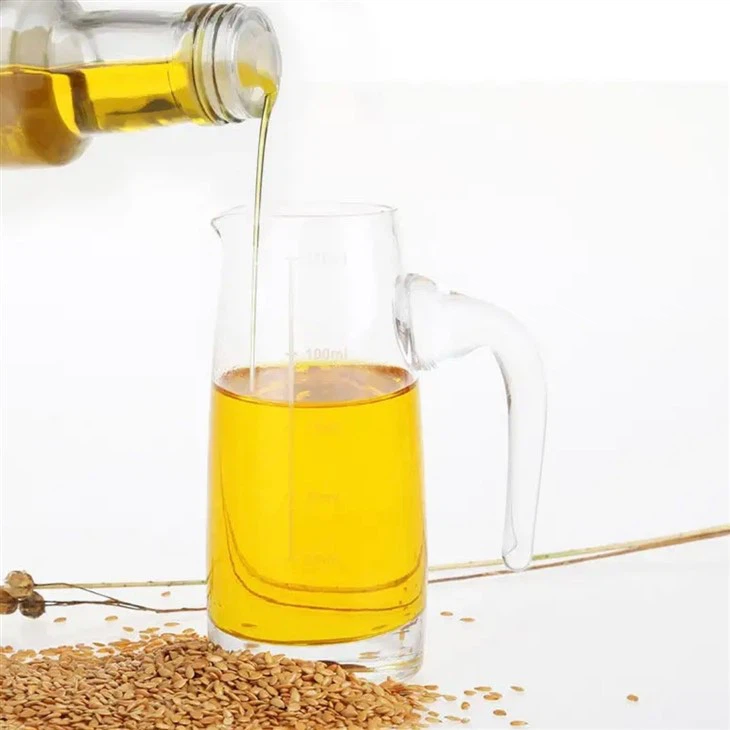
Linseed oil has a positive effect on health in many ways. For example, the consumption of linseed oil is recommended for circulatory diseases. But the oil also has an effect on a weak immune system, cracked skin and complaints during the menopause. Linseed oil helps to regenerate the cells, which is why it alleviates the symptoms of neurodermatitis or chronic intestinal diseases.
The consumption of linseed oil is particularly important in a vegan or vegetarian diet in order to supply the body with sufficient omega-3 fatty acids. To preserve all the valuable ingredients, it is advisable to use the oil only cold. It is suitable for salads, smoothies, vegetable crudités or various cold dishes such as quark or jacket potatoes.
Linseed oil is obtained from linseed, the ripe seeds of the common flax (Linum usitatissimum), also called flax. Other species of linseed from the Linum genus are also used in smaller quantities in the oil. Linseed oil has a slightly nutty, mild taste and the gentle cold pressing process preserves all the important ingredients. However, these do not make the edible linseed oil durable for long. If stored in a cool place away from light, the oil can be consumed for about 6 weeks.
Not every oil is the same. The various edible oils sometimes differ fundamentally in their ingredients. Roughly speaking, fats can be divided into three groups: saturated, monounsaturated and polyunsaturated fatty acids. All three are important for the body, but most oils and fats on the market contain mainly or only saturated fatty acids. This easily leads to a deficiency of unsaturated fatty acids.
The polyunsaturated omega-3 and omega-6 fatty acids are particularly healthy. These play a key role in regulating blood pressure and cholesterol levels. However, most people do not consume enough of them. This is exactly where edible linseed oil comes into play. Linseed oil is the top performer when it comes to omega-3 fatty acids. Over 50% consists of these important fatty acids. No other oil can boast such a high value.

● Fry vegetables at low temperature with flaxseed oil. Flaxseed oil has high nutritional value. When frying vegetables, pay attention to controlling the oil temperature. It is recommended to quickly add vegetables when the hot pot is cold and the oil is surging or creating waves at the bottom of the pot. In addition, flaxseed oil (in small amounts) can be mixed with other vegetable oils (in large amounts) and used for stir frying. It is also important to control the oil temperature and not excessively high, as flaxseed oil is not suitable for frying.
● Add flaxseed oil directly to the dish. Flaxseed oil can be directly added to any dish, which will maximize the characteristics of the dish, making the taste richer and more delicious.
● Use flaxseed oil for sauce or pickling. Before cooking, marinate with flaxseed oil to enhance the delicacy of the food and enhance the flavor by adding other spices.
● Linseed oil is used as a clear oil. Serve as a clear oil in cold vegetables, mixed salads, drizzled in soup, or before stir frying.
● Mix flaxseed oil with yogurt.
● Bake pastries with flaxseed oil.
● Direct consumption of refrigerated and fresh flaxseed oil. Take 1 spoonful (about 10-15ml) daily, and long-term consumption can achieve good results. If this oil is mixed with purified water or with flavorful drinks such as honey, coconut milk, hawthorn fruit tea, etc., the taste will be better.
Why Use Linseed Oil to Protect Wood
Linseed oil can be applied to wood without the need for complex surface prep. It's an ecological and natural alternative to varnish on both indoor and outdoor surfaces owing to its protective properties. In fact, in terms of quality and cost, it is probably the most attractive alternative wood oil product on the market.
Linseed oil is useful for protecting wood surfaces, but it is not a paint. It has waterproofing capacity, but it does not protect from dirt or intense sunlight (though some manufacturers add UV protection to their formulations). Linseed oil works well on wood with a natural or rustic finish and on exotic woods, and it holds up on poorly maintained wood and wood that is exposed to high levels of friction.
Linseed oil is the best option to protect natural wood that is neither varnished nor previously stripped of other coatings. This oil is used to coat wood and protect it from the effects of deteriorating agents. It's extremely easy to use and dries rapidly.
The oil must be applied on virgin wood, but the process can be repeated over time to maintain adequate protection. Exterior wood surfaces exposed to weathering conditions generally need maintenance every two years. Maintenance is quite easy and inexpensive—only a small amount of oil is necessary to treat dull or damaged areas. Completely sanding your wood surface is not necessary, which saves you time and money.
Linseed oil must be applied to unvarnished wood, otherwise the oil will fail to deeply penetrate the wood surface. Because linseed oil is a wood-penetrating solution, it nourishes your wood surfaces while sealing, staining, and finishing them at the same time. If you choose to varnish after applying linseed oil, the varnish may not stick properly to the surface.
Use a paintbrush, roller, or cotton cloth or rag to apply the oil, depending on the size of the surface area to cover. The product does not leave splotches or lap marks, making the application process simple and quick. Wipe up excess oil, and within approximately 10 minutes the oil will completely saturate the wood grain.

The content of crude protein, fat, and sugar in flaxseed oil is relatively high.
Flaxseed oil also contains vitamins, flavonoids, as well as mineral nutrients such as potassium and zinc.
Flavonoids contained in flax oil can reduce blood lipids and prevent atherosclerosis.
Linseed oil contains abundant mineral elements such as potassium and zinc, among which potassium is related to maintaining normal blood pressure in the human body. Zinc is an essential trace element for the human body and plays an important role in maintaining normal physiological functions.
Flaxseed oil also contains vitamin E, which is a strong and effective free radical scavenger with anti-aging and antioxidant effects.
Raw vs Boiled Linseed Oil
Raw Linseed Oil is the purest form of the oil, extracted from the flax seed and sold without any chemicals, solutions, or additives to preserve it. This is perfect for oil-based paints as it allows them to completely level and set properly, giving a smoother finish. However, slow drying times often limits the use of Raw Linseed Oil to items where drying time is not a consideration.
Boiled Linseed Oil is regular Linseed Oil that is treated with hot air and additives so that it dries quicker. Unlike the name suggests, it isn't actually boiled!
Linseed Oils are a traditional option for nourishing and protecting wood, but which is the best one to use? Once dry both oils will provide a similar level of nourishment and protection to the wood and they will both slightly darken and enhance the woods natural grain. But since regular Linseed Oil can take up to three days to dry, we always recommend using Boiled Linseed Oil when it comes to oiling all wooden surafces.
Boiled Linseed Oil still isn't a super fast drying oil, taking upto 24 hours to dry, but compared to Linseed Oil it is lightening fast!
How to Use Linseed Oil for Your Skin
A small number of women were supplemented with linseed oil for 12 weeks. Results showed that skin sensitivity to irritation was reduced, and skin hydration and smoothness also improved.
Linseed oil can be used directly on your skin without any additional carrier oils for:
Moisturising
Thanks to its high levels of omega-3 fatty acids, linseed oil can be used as a moisturiser to hydrate and repair the skin.
Remove makeup
For a natural way to cleanse your skin, linseed oil offers an organic way of removing makeup without clogging pores, all without any additional chemicals.
Acne prevention
Linseed oil may be able to control excess sebum production, the substance that can cause acne, helping to improve the overall condition of your skin.
Hair care
Gently massaging in small amounts of linseed oil into your hair can help to improve its condition, especially if it is prone to breaking and damage, due to its vitamin E content.
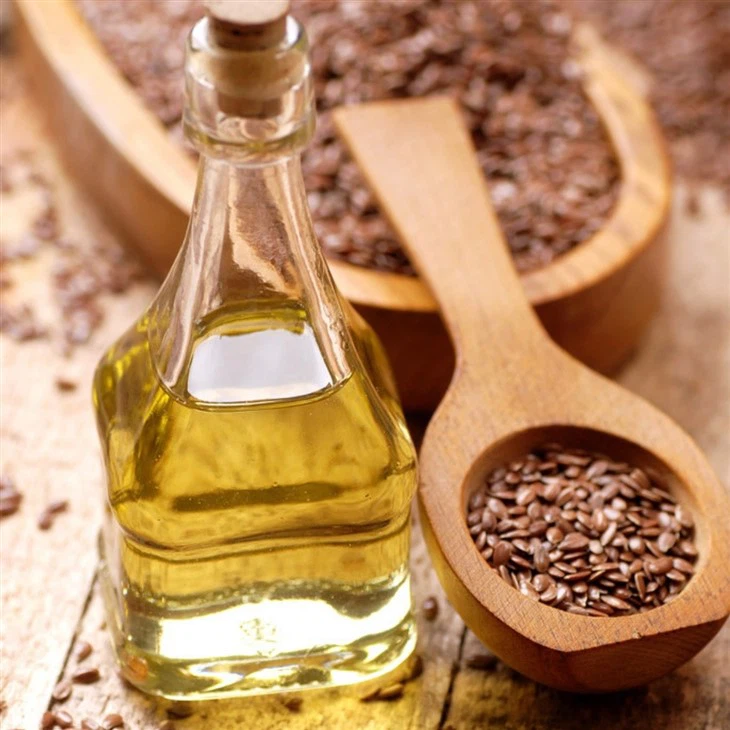
To maintain the quality of flaxseed oil, it must be stored in a cool and dry place, and the best place for that is the refrigerator. Flaxseed oil is pretty sensitive and can spoil rapidly when exposed to heat, light, and air; hence, keeping it cold is advisable after opening. When shopping for your flaxseed oil, go for a brand that keeps it in a dark bottle. Dark bottles are commonly used for liquid flaxseed oil to shield it from light.
Flaxseed oil, if unopened, can retain its freshness for 6-12 months if kept in a cool, dark, and dry location, shielded from heat and light. Before usage, always double-check the expiration date on the bottle.
Once opened, it is advised to refrigerate flaxseed oil to minimize oxidation and prolong its shelf life. Properly sealed and refrigerated, it can last for 4-6 weeks. It has a shorter shelf life than a lot of other fats and oils.
FAQ
We're professional linseed oil manufacturers and suppliers in China, specialized in providing high quality customized service. We warmly welcome you to wholesale discount linseed oil in stock here from our factory. Contact us for free sample.
Linseed Oil, linseed oil for digestive system, linseed oil for hospital furniture