

As a supplier of rosin for violins, I understand the crucial role that high - quality rosin plays in enhancing the performance of a violin. Rosin is the unsung hero of the violin world, providing the friction needed for the bow to grip the strings and produce rich, resonant tones. But how can one accurately test the quality of a new violin rosin? In this blog, I will share some scientific and practical methods based on my years of experience in the industry.
Visual Inspection
The first step in testing violin rosin is a simple visual inspection. High - quality rosin should have a consistent color and texture. Generally, pure rosin, like the one you can find at Pure Rosin, often has a clear and uniform appearance. Dark or discolored patches may indicate impurities or improper storage conditions.
For natural rosin, such as the ones available at Natural Rosin, it may have a more organic look, with some natural variations in color. However, these variations should be subtle and not accompanied by large, dark spots. A smooth surface is also a good sign. Rough or bumpy rosin may not distribute evenly on the bow hair, leading to inconsistent sound production.
Hardness Test
The hardness of rosin is a key factor that affects its performance. Different musicians prefer different hardness levels depending on their playing style, the type of violin strings, and the environmental conditions.
To test the hardness of rosin, you can use a simple method. Take a small piece of the rosin and try to make a scratch on it with your fingernail. If the rosin is too soft, it will leave a deep mark easily. Soft rosin tends to produce more dust and may need to be reapplied more frequently. On the other hand, if it's extremely hard and your fingernail can't make any mark, it may not be able to transfer enough resin to the bow hair efficiently.

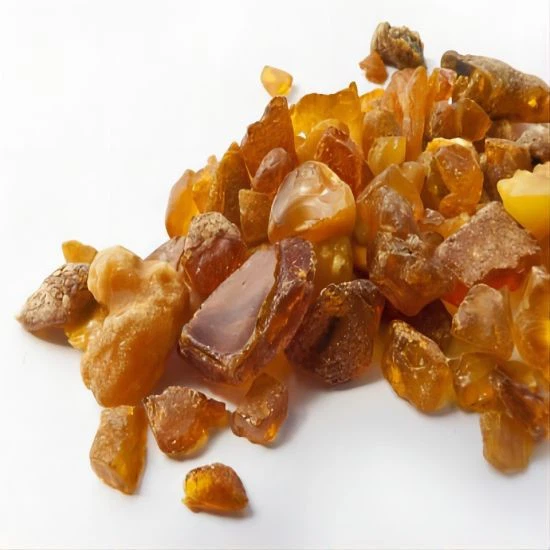
A medium - hard rosin is often a good choice for most violinists. It provides a good balance between producing enough friction and minimizing dust. You can also refer to the product descriptions of Pure Rosin to get an idea of the recommended hardness for different playing scenarios.
Sound Quality Test
Ultimately, the most important test of rosin quality is how it affects the sound of the violin. To conduct a sound quality test, you'll need a violin and a bow. First, apply a small amount of the new rosin to the bow hair. Start with a light application and gradually increase if needed.
Play a variety of notes and scales on the violin. Pay attention to the clarity, richness, and projection of the sound. High - quality rosin should allow the bow to grip the strings smoothly, producing a warm and full - bodied tone. If the sound is scratchy, weak, or lacks resonance, it could be a sign that the rosin is not of good quality.
You can also compare the sound produced with the new rosin to that of a well - known, high - quality rosin you're familiar with. This side - by - side comparison can help you identify any differences in sound quality more accurately.
Dust Production Test
Another aspect to consider is the amount of dust produced by the rosin. Excessive dust can be a nuisance, as it can accumulate on the violin and in the case, and may also affect the performance of the instrument over time.
To test dust production, play the violin for a few minutes with the new rosin. Then, check the area around the violin and the bow for dust. If you notice a large amount of dust falling off the bow or accumulating on the strings, the rosin may be too soft or of lower quality. Good - quality rosin should leave minimal dust while still providing sufficient friction.
Adhesion Test
The adhesion of rosin to the bow hair is essential for consistent sound production. To test the adhesion, after applying the rosin to the bow hair, run your fingers gently along the hair. The rosin should adhere well to the hair without flaking off easily.
You can also try making some quick, forceful strokes on the strings. If the rosin comes off the bow hair in large chunks or fails to stay on during intense playing, it may not have good adhesion. A rosin with strong adhesion will stay on the bow hair throughout different playing styles and intensities.
Long - term Performance Test
Testing the long - term performance of rosin is also important. Rosin that performs well initially may degrade over time due to factors such as exposure to air, humidity, and temperature changes.
To conduct a long - term performance test, use the rosin regularly over a period of several weeks or months. Observe how the sound quality, dust production, and adhesion change over time. A high - quality rosin should maintain its performance characteristics throughout this period. If you notice a significant decline in any of these aspects, it may not be a reliable choice.
Compatibility with Strings
Different types of violin strings may require different types of rosin. For example, gut strings may work better with a softer rosin, while synthetic or steel strings may prefer a harder rosin.
When testing a new rosin, make sure to consider the type of strings on your violin. Try the rosin on different sets of strings if possible to see how it performs. This will help you determine if the rosin is compatible with your specific instrument and playing needs.
Conclusion
Testing the quality of a new violin rosin involves a combination of visual, physical, and auditory assessments. By carefully examining the rosin's appearance, hardness, sound quality, dust production, adhesion, long - term performance, and compatibility with strings, you can make an informed decision about its quality.
As a supplier of violin rosin, I am committed to providing high - quality products that meet the diverse needs of musicians. If you are interested in purchasing our rosin or have any questions about testing rosin quality, please feel free to contact us for further discussion and procurement negotiations. We look forward to working with you to enhance your musical experience.
References
- "The Art of Violin Playing" by Carl Flesch
- "The Science of Stringed Instruments" by Neville H. Fletcher and Thomas D. Rossing
- Industry reports on violin rosin production and quality standards