

In the ever - evolving landscape of 3D printing, the search for innovative and sustainable materials is a continuous journey. As a natural rosin supplier, I am often asked whether natural rosin can be used in 3D printing materials. This blog post aims to explore this question in depth, considering the properties of natural rosin, its potential applications in 3D printing, and the challenges and opportunities it presents.
Properties of Natural Rosin
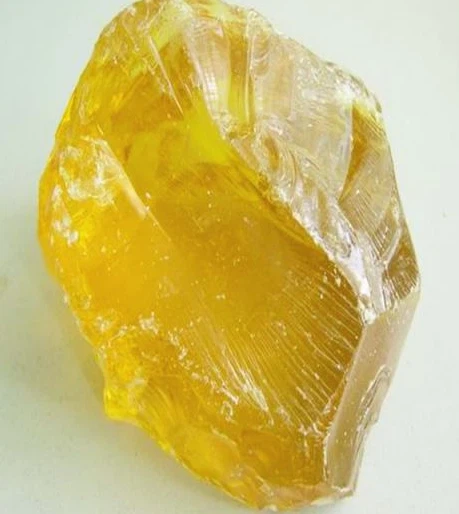
Natural rosin is a solid form of resin obtained from pine trees and other conifers. It is a complex mixture of organic compounds, mainly abietic acid and its isomers. One of the most notable properties of natural rosin is its adhesive nature. It has been used for centuries in various industries, such as the music industry for violin bows, the adhesive industry, and in soldering fluxes.
In addition to its adhesive properties, natural rosin is relatively hard and brittle at room temperature. However, it can be softened by heating, which makes it potentially suitable for processing in 3D printing, where materials often need to be melted or softened to be extruded or cured. Natural rosin also has good solubility in many organic solvents, which could be useful in certain 3D printing processes that involve solution - based techniques.
Another important aspect of natural rosin is its natural origin. In an era where sustainability is a major concern, natural rosin offers an eco - friendly alternative to many synthetic materials used in 3D printing. It is a renewable resource, as pine trees can be replanted, and its production generally has a lower environmental impact compared to the production of some petroleum - based polymers.
Potential Applications in 3D Printing
Fused Deposition Modeling (FDM)
Fused Deposition Modeling is one of the most common 3D printing technologies. In FDM, a thermoplastic filament is heated and extruded layer by layer to create a three - dimensional object. Natural rosin could potentially be used in FDM if it can be formulated into a suitable filament. By blending natural rosin with other polymers or additives, it may be possible to create a filament with the right mechanical properties, such as strength and flexibility, for 3D printing. For example, adding a small amount of a flexible polymer to natural rosin could improve its toughness and prevent it from cracking during the printing process.
Stereolithography (SLA)
Stereolithography uses a liquid resin that is cured by a light source, typically a laser or UV light, to create a solid object. Natural rosin can be modified to make it photosensitive. By adding photoinitiators and other additives, it can be transformed into a liquid resin suitable for SLA 3D printing. This could open up new possibilities for creating detailed and high - resolution 3D printed objects using a natural material. For instance, in the production of jewelry or dental models, the use of natural rosin - based resin could offer a unique combination of aesthetics and sustainability.
Binder Jetting
In binder jetting, a liquid binder is selectively deposited onto a powder bed to bond the powder particles together and form a 3D object. Natural rosin could be used as a binder in this process. Its adhesive properties make it a potential candidate for binding various powders, such as ceramics or metals. Using natural rosin as a binder could reduce the environmental impact of the binder jetting process, as it is a natural and biodegradable material.
Challenges in Using Natural Rosin in 3D Printing
Mechanical Properties
One of the main challenges of using natural rosin in 3D printing is its mechanical properties. As mentioned earlier, natural rosin is hard and brittle at room temperature. This can lead to problems such as cracking and poor layer adhesion in 3D printed objects. To overcome this, extensive research is needed to develop formulations that can improve the mechanical strength and flexibility of natural rosin - based materials. This may involve the use of additives, such as plasticizers or fibers, to enhance the properties of the material.
Processing Conditions
Natural rosin has a relatively narrow processing window. It needs to be heated to a specific temperature range to be softened for 3D printing, but if the temperature is too high, it can decompose. This requires precise control of the processing conditions, such as the temperature of the extruder in FDM or the curing temperature in SLA. Developing equipment and processes that can accurately control these conditions is essential for the successful use of natural rosin in 3D printing.
Compatibility with Existing 3D Printing Equipment
Most 3D printing equipment is designed for use with specific materials, such as ABS or PLA. Natural rosin - based materials may not be fully compatible with existing equipment. For example, the viscosity of natural rosin - based filaments or resins may be different from traditional materials, which could affect the extrusion or curing process. Modifications to the equipment may be required to ensure smooth and efficient 3D printing with natural rosin.
Opportunities and Future Outlook
Despite the challenges, there are significant opportunities for using natural rosin in 3D printing. The demand for sustainable and eco - friendly materials in the 3D printing industry is growing, and natural rosin can meet this demand. As research progresses, it is likely that new formulations and processing techniques will be developed to overcome the current limitations.
Moreover, the unique properties of natural rosin, such as its adhesive nature and natural origin, could give rise to new applications in 3D printing. For example, in the production of eco - friendly packaging or biodegradable medical devices, natural rosin - based materials could offer a competitive advantage.
In addition, as a natural rosin supplier, I am committed to working with researchers and 3D printing companies to explore the potential of natural rosin in this field. We can provide high - quality natural rosin, such as Quality Rosin and Pure Rosin, and support the development of new materials and processes. Our Natural Rosin is sourced from sustainable forests and undergoes strict quality control to ensure its suitability for various applications.
Conclusion
In conclusion, natural rosin has the potential to be used in 3D printing materials. Its unique properties, such as its adhesive nature, natural origin, and relatively easy processability under certain conditions, make it an attractive option for the 3D printing industry. However, there are still challenges to overcome, including improving its mechanical properties, optimizing processing conditions, and ensuring compatibility with existing equipment.

As a natural rosin supplier, I believe that by collaborating with the 3D printing community, we can unlock the full potential of natural rosin in this exciting field. If you are interested in exploring the use of natural rosin in your 3D printing projects, please feel free to contact me for more information and to discuss potential procurement and collaboration opportunities.
References
- Smith, J. (2018). Natural Resins in Modern Manufacturing. Journal of Sustainable Materials, 12(3), 45 - 56.
- Johnson, A. (2019). Advances in 3D Printing Materials. Proceedings of the International Conference on Additive Manufacturing, 23 - 30.
- Brown, C. (2020). The Future of Sustainable 3D Printing. Environmental Science and Technology, 44(8), 321 - 330.