

Hey there! As a supplier of Pure Rosin, I often get asked about the thermal conductivity of this amazing substance. In this blog post, I'll dive deep into what thermal conductivity is, what the thermal conductivity of pure rosin is, and why it matters in various applications.
Let's start with the basics. Thermal conductivity is a measure of a material's ability to conduct heat. It's usually denoted by the symbol "k" and is measured in watts per meter - kelvin (W/(m·K)). A high thermal conductivity means that the material can transfer heat quickly, while a low thermal conductivity indicates that the material is a poor conductor of heat and can act as an insulator.
So, what about pure rosin? Pure Rosin is a natural resin obtained from pine trees and other conifers. It's widely used in a variety of industries, from musical instruments to electronics, adhesives, and even in the food industry. But when it comes to its thermal conductivity, it's not as straightforward as some other well - known materials like metals or ceramics.
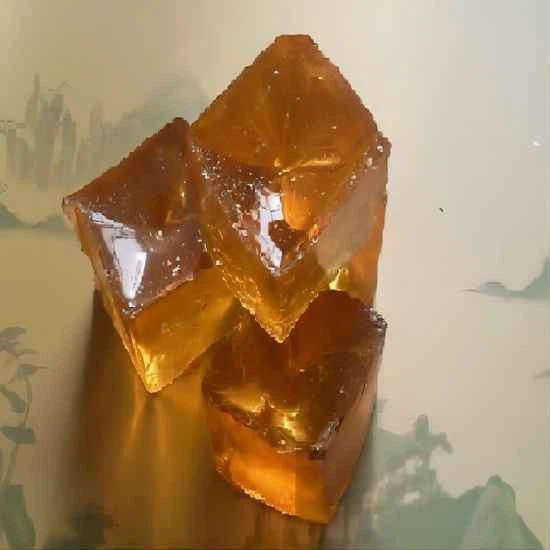

The thermal conductivity of pure rosin is relatively low. Typically, it ranges from about 0.1 to 0.2 W/(m·K). This low value makes it a decent insulator. To put it in perspective, metals like copper have a thermal conductivity of around 400 W/(m·K), which is thousands of times higher than that of pure rosin.
The reason for the low thermal conductivity of pure rosin lies in its molecular structure. Rosin is made up of complex organic compounds with a large number of long - chain molecules. These molecules are not arranged in a highly ordered way like in metals, where electrons can move freely and carry heat energy. Instead, the heat transfer in rosin occurs mainly through the vibration and rotation of its molecules, which is a much slower process.
Now, let's talk about why the thermal conductivity of pure rosin matters in different applications.
Musical Instruments
In the world of musical instruments, especially stringed instruments like violins, cellos, and guitars, rosin is used on the bows. The low thermal conductivity of rosin is actually beneficial here. When a musician plays the instrument, the friction between the bow and the strings generates heat. Since rosin is a poor conductor of heat, it doesn't quickly transfer this heat away. This helps to maintain the consistency and stickiness of the rosin, which is crucial for producing a good sound. If the rosin had a high thermal conductivity, it might melt or change its properties too quickly due to the heat generated during playing.
Electronics
In electronics, the low thermal conductivity of pure rosin can be both an advantage and a disadvantage. On one hand, it can be used as an insulating material. For example, in some printed circuit boards (PCBs), rosin - based soldering fluxes can act as an insulator between different components, preventing unwanted heat transfer and short - circuits. On the other hand, in applications where heat dissipation is important, such as in high - power electronic devices, the low thermal conductivity of rosin might be a problem. In these cases, other materials with higher thermal conductivity are often used in combination with rosin to manage heat effectively.
Adhesives
Rosin is a common ingredient in many adhesives. Its low thermal conductivity can help in maintaining the integrity of the adhesive bond. When an adhesive is exposed to heat, a material with high thermal conductivity might transfer the heat too quickly, causing the adhesive to degrade or lose its bonding strength. Since rosin doesn't conduct heat well, it can protect the adhesive from rapid temperature changes and keep the bond stable.
Food Industry
In the food industry, pure rosin is sometimes used in the production of chewing gum and as a glazing agent for fruits. The low thermal conductivity of rosin helps in keeping the products at a more stable temperature. For example, in chewing gum, it can prevent the gum from melting too quickly when it's in the mouth, which is at a relatively warm temperature.
As a supplier of Pure Rosin, I understand the importance of providing high - quality products that meet the specific needs of different industries. We offer Quality Rosin that is carefully processed to ensure consistent thermal conductivity and other properties. Whether you need a small amount for a DIY project or Bulk Rosin for large - scale industrial production, we've got you covered.
If you're in the market for pure rosin and want to learn more about its properties, applications, or pricing, don't hesitate to get in touch. We're always happy to have a chat, answer your questions, and help you find the right rosin for your specific requirements. Whether you're a musician looking for the perfect bow rosin or an industrial manufacturer in need of a reliable adhesive ingredient, we can work together to make sure you get the best product.
References
- Incropera, F. P., & DeWitt, D. P. (2002). Fundamentals of Heat and Mass Transfer. Wiley.
- Kreith, F., & Bohn, M. S. (2001). Principles of Heat Transfer. Brooks/Cole.
- Zorowski, M. E. (1977). Rosin: Sources, Production, and Uses. U.S. Department of Agriculture.