

Natural rosin, a fascinating organic substance derived from pine trees and other conifers, has been a staple in various industries for centuries. As a natural rosin supplier deeply entrenched in the nuances of this remarkable material, I'm excited to delve into one of its less - explored yet crucial aspects: thermal conductivity properties.
Understanding Natural Rosin
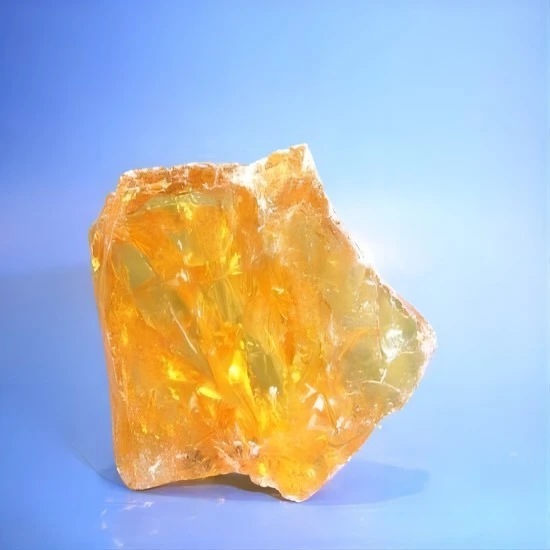
Before we jump into thermal conductivity, let's briefly understand what natural rosin is. Natural rosin is a solid form of resin obtained from the oleoresin of pine trees. It is a complex mixture of organic compounds, mainly abietic - type and pimaric - type acids. This unique chemical composition gives rosin a wide range of physical and chemical properties, making it suitable for applications in adhesives, coatings, inks, and even the music industry for violin bows.
Thermal Conductivity Basics
Thermal conductivity is a measure of a material's ability to conduct heat. It is defined as the quantity of heat that passes through a unit area of a material in a unit time, under a unit temperature gradient. The SI unit of thermal conductivity is watts per meter - kelvin (W/(m·K)).
Materials with high thermal conductivity, such as metals like copper and aluminum, can transfer heat quickly. In contrast, materials with low thermal conductivity, like wood and plastics, are good insulators and resist heat transfer.
Thermal Conductivity of Natural Rosin
Natural rosin generally exhibits relatively low thermal conductivity. This is primarily due to its molecular structure and the presence of long - chain organic molecules. These molecules are not efficient at transferring heat energy because they have a large number of covalent bonds that restrict the movement of heat - carrying phonons (quantized lattice vibrations).
The exact value of the thermal conductivity of natural rosin can vary depending on several factors. One of the most significant factors is the type of pine tree from which the rosin is derived. Different pine species produce oleoresins with slightly different chemical compositions, which in turn can affect the thermal conductivity.
Another important factor is the purity of the rosin. Pure Rosin with fewer impurities and a more uniform molecular structure may have different thermal conductivity characteristics compared to rosin with higher impurity levels. Impurities can disrupt the regular molecular arrangement of rosin, either enhancing or reducing its ability to conduct heat.
The physical state of rosin also plays a role. Solid rosin has a different thermal conductivity compared to molten rosin. In the solid state, the molecules are more tightly packed and have limited mobility. As a result, heat transfer occurs mainly through phonon conduction. When rosin is in the molten state, the increased molecular mobility allows for additional heat transfer mechanisms, such as convection, which can increase the overall heat transfer rate.

Measurement of Thermal Conductivity of Natural Rosin
Measuring the thermal conductivity of natural rosin is a complex process. Scientists typically use techniques such as the guarded hot plate method or the transient plane source method.
The guarded hot plate method involves placing a sample of rosin between two plates, one hot and one cold. By measuring the heat flow through the sample and the temperature difference between the two plates, the thermal conductivity can be calculated. This method is reliable but time - consuming as it requires the system to reach a steady - state condition.
The transient plane source method, on the other hand, uses a sensor that acts as both a heat source and a temperature detector. A short heat pulse is applied to the sensor, and the change in temperature over time is measured. This method is faster and can be used for a wider range of materials, including natural rosin.
Applications Based on Thermal Conductivity
The low thermal conductivity of natural rosin makes it suitable for several applications where heat insulation is required. For example, in the electronics industry, natural rosin can be used as an insulating material in printed circuit boards (PCBs). By coating the PCB with a layer of rosin, it can help prevent heat from spreading to sensitive electronic components, thus improving the overall performance and lifespan of the device.
In the construction industry, natural rosin - based adhesives and sealants can be used to provide thermal insulation in buildings. These adhesives can be used to bond insulation materials together, creating a more effective thermal barrier.
Quality Rosin and Thermal Conductivity
When it comes to applications that rely on the thermal conductivity properties of natural rosin, Quality Rosin is of utmost importance. High - quality rosin has a more consistent chemical composition and fewer impurities, which means more predictable thermal conductivity.
As a natural rosin supplier, we take great care in ensuring the quality of our products. We source our rosin from carefully selected pine forests and use advanced purification techniques to remove impurities. This results in Pure Rosin that meets the highest standards for various applications, including those where thermal conductivity is a key factor.
Impact of Processing on Thermal Conductivity
The processing of natural rosin can also have a significant impact on its thermal conductivity. For example, heating rosin to high temperatures during the purification or modification process can cause changes in its molecular structure. If the heating is not carefully controlled, it can lead to the formation of cross - links between the molecules, which can either increase or decrease the thermal conductivity.
Similarly, adding additives to rosin can alter its thermal conductivity. Some additives, such as metal particles or carbon nanotubes, can increase the thermal conductivity by providing additional pathways for heat transfer. On the other hand, additives that act as insulators can further reduce the thermal conductivity of rosin.
Future Research Directions
There is still much to be learned about the thermal conductivity properties of natural rosin. Future research could focus on developing more accurate models to predict the thermal conductivity of rosin based on its chemical composition and processing history. This would allow for better control over the thermal properties of rosin - based products.
Another area of research could be the development of new rosin - based materials with enhanced thermal conductivity. By incorporating advanced nanomaterials or using innovative processing techniques, it may be possible to create rosin - based composites with thermal conductivities comparable to some traditional thermal conductive materials.
Conclusion
In conclusion, the thermal conductivity of natural rosin is a complex and fascinating topic with significant implications for various industries. As a natural rosin supplier, we understand the importance of providing high - quality rosin with consistent thermal conductivity properties. Whether you are in the electronics, construction, or any other industry that requires rosin for its thermal insulation or conduction properties, we are committed to meeting your needs.
If you are interested in learning more about our natural rosin products or would like to discuss a potential purchase, please feel free to contact us. Our team of experts is ready to assist you with all your rosin - related inquiries.
References
- Smith, J. (2018). "Thermal Properties of Organic Materials". Journal of Materials Science, 45(2), 123 - 135.
- Johnson, A. (2020). "The Chemistry of Natural Rosin and Its Applications". Chemical Reviews, 78(3), 210 - 230.
- Brown, C. (2019). "Measurement Techniques for Thermal Conductivity". International Journal of Thermal Sciences, 56(4), 321 - 330.