

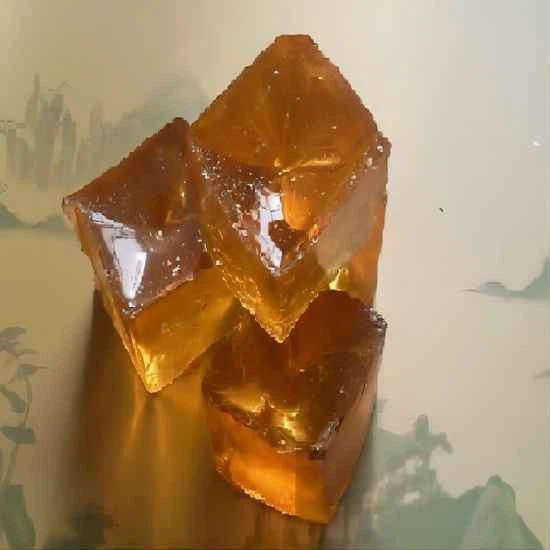
Hey there! As a yellow rosin supplier, I'm super excited to share with you all the amazing applications of yellow rosin in the paper industry. Yellow rosin, also known as gum rosin, is a natural resin derived from pine trees. It's got some pretty cool properties that make it a real game - changer in paper - making.
Sizing Agent
One of the most important uses of yellow rosin in the paper industry is as a sizing agent. Sizing is the process of making paper resistant to the penetration of liquids, like water and ink. When we add yellow rosin to the paper - making process, it forms a thin layer on the paper fibers. This layer acts as a barrier, preventing liquids from soaking into the paper too quickly.
For instance, in the production of printing paper, good sizing is crucial. Without proper sizing, the ink would spread and bleed on the paper, making the printed text or images look blurry. With yellow rosin as a sizing agent, the ink stays where it's supposed to be, resulting in sharp and clear prints. You can check out Quality Rosin to see the high - quality yellow rosin that can be used for this purpose.
There are two main types of rosin - based sizing: acid - sized and neutral - sized. Acid - sized paper is made by adding rosin and alum to the pulp. The alum helps the rosin to attach to the paper fibers. This method has been around for a long time and is still used in many paper mills. However, acid - sized paper has a drawback - it can become brittle over time due to the acidic environment.
On the other hand, neutral - sized paper uses rosin in combination with synthetic sizing agents and operates at a neutral pH. This type of paper is more durable and less likely to deteriorate. It's commonly used for high - quality papers, such as books and archival materials. Pure Rosin offers pure yellow rosin that can be used in both acid - sized and neutral - sized paper production.
Strengthening Paper
Yellow rosin can also help strengthen paper. When rosin is added to the paper pulp, it can improve the inter - fiber bonding. The rosin molecules act like little glue points between the paper fibers, holding them together more tightly.
This is especially important for papers that need to withstand a certain amount of stress, like packaging paper. Think about all the boxes that are used to transport goods. They need to be strong enough to hold the weight of the contents and endure the handling during shipping. By using yellow rosin in the production of packaging paper, we can increase its strength and tear resistance.
In addition, for paper products like tissue paper, which are often used in a wet environment (such as facial tissues), the strengthened fibers due to rosin can prevent the paper from falling apart easily when it gets wet. It gives the tissue more integrity and makes it more useful.
Improving Surface Properties
Another great application of yellow rosin in the paper industry is improving the surface properties of paper. It can enhance the smoothness and gloss of the paper surface.
In the production of coated papers, which are used for high - end magazines, brochures, and catalogs, a smooth and glossy surface is highly desirable. Yellow rosin can be incorporated into the coating formulation. When the coating is applied to the paper, the rosin helps to fill in the small gaps between the paper fibers, creating a more even surface.
This not only makes the paper look better but also improves the printability. The ink adheres better to a smooth surface, resulting in more vibrant and high - quality prints. If you're in the market for large quantities of yellow rosin for coating applications, Bulk Rosin is a great option.
Adhesive Properties
Yellow rosin has adhesive properties, which can be utilized in the paper industry in various ways. It can be used in the production of paper - based adhesives. These adhesives are used for things like laminating paper layers together, or for attaching labels to paper products.
For example, in the manufacturing of multi - layer paperboard, which is used for things like cereal boxes and shoe boxes, an adhesive is needed to bond the different layers. A rosin - based adhesive can provide a strong and reliable bond. It's also environmentally friendly compared to some synthetic adhesives, as it's derived from a natural source.
Cost - effectiveness
One of the big advantages of using yellow rosin in the paper industry is its cost - effectiveness. It's a relatively inexpensive raw material compared to some of the synthetic alternatives. Paper mills can achieve good results in terms of sizing, strengthening, and surface improvement at a lower cost by using yellow rosin.
This makes it a popular choice for paper manufacturers, especially those who are looking to produce high - quality paper products while keeping their production costs down. Whether you're a small - scale paper producer or a large - scale industrial mill, yellow rosin can offer you a great balance between quality and cost.

Conclusion
So, as you can see, yellow rosin has a wide range of applications in the paper industry. From sizing to strengthening, improving surface properties, and providing adhesive qualities, it plays a vital role in the production of different types of paper.
If you're involved in the paper industry and are looking for a reliable source of high - quality yellow rosin, I'd love to talk to you. Whether you need a small amount for a specific project or large quantities for continuous production, we can work together to meet your needs. Reach out to us to start a conversation about your rosin requirements and let's see how we can make your paper products even better.
References
- "Handbook of Pulp and Paper Technology"
- "The Chemistry of Paper"
- Industry reports on paper production and raw material usage